Counting Visitors in Museums

Finding a reliable way to count visitors is an ongoing puzzle for museums. As part of our mission to create meaningful experiences, we embarked on a research journey into the technology available for counting museum visitors. We discovered several potential off-the-shelf solutions employing technology like millimeter wave detection, infrared sensors, laser beam breakers and machine vision. In each case, we encountered a variety of trade-offs which ultimately led us to do what any level-headed development team would do: build our own. And thus, Count Trackula, our bleeding-edge solution arose from morbid curiosity.

The Case for a Custom Solution

Off-the-shelf solutions seemed promising but didn’t quite suit our needs. For instance, infrared sensors and beam breakers generally require precise installation and struggle with simultaneous crossings, often missing visitors entirely. Additionally, these systems are often installed in plain sight, making them susceptible to tampering or interference. Systems that use machine vision technology had the potential to be more accurate at distinguishing people, but we had trust issues with many of the products in this space. We wanted a solution that guaranteed no sensitive data or images were stored or shared. Millimeter wave technology, while accurate and private, is often encumbered by proprietary software with unclear pricing structures.

In the end, we opted to try Apple’s built-in computer vision models in iOS for person detection and tracking. Using an iPhone saved us the headache of needing to assemble our own hardware solution and, given its capabilities, a refurbished 12 mini is relatively affordable. Best of all, an app-based solution lends itself to being accessible to others. All of this gave us complete control to hone the accuracy, privacy, and adaptability of our solution.

Count Trackula on GitHub

Embracing a Vision

Through our development journey, we uncovered valuable insights that shaped the functionality and practicality of Count Trackula. While there is still room for improvement, here’s a breakdown of our current technical approach and some of the things we learned:

The app captures video frames as rapidly as the iPhone processor allows, sending each frame to an ML-based body detection model via VNDetectHumanRectanglesRequest. We found body detection to be more practical than other requests that consider more granular features like hands, faces, or poses.

Detection and Tracking

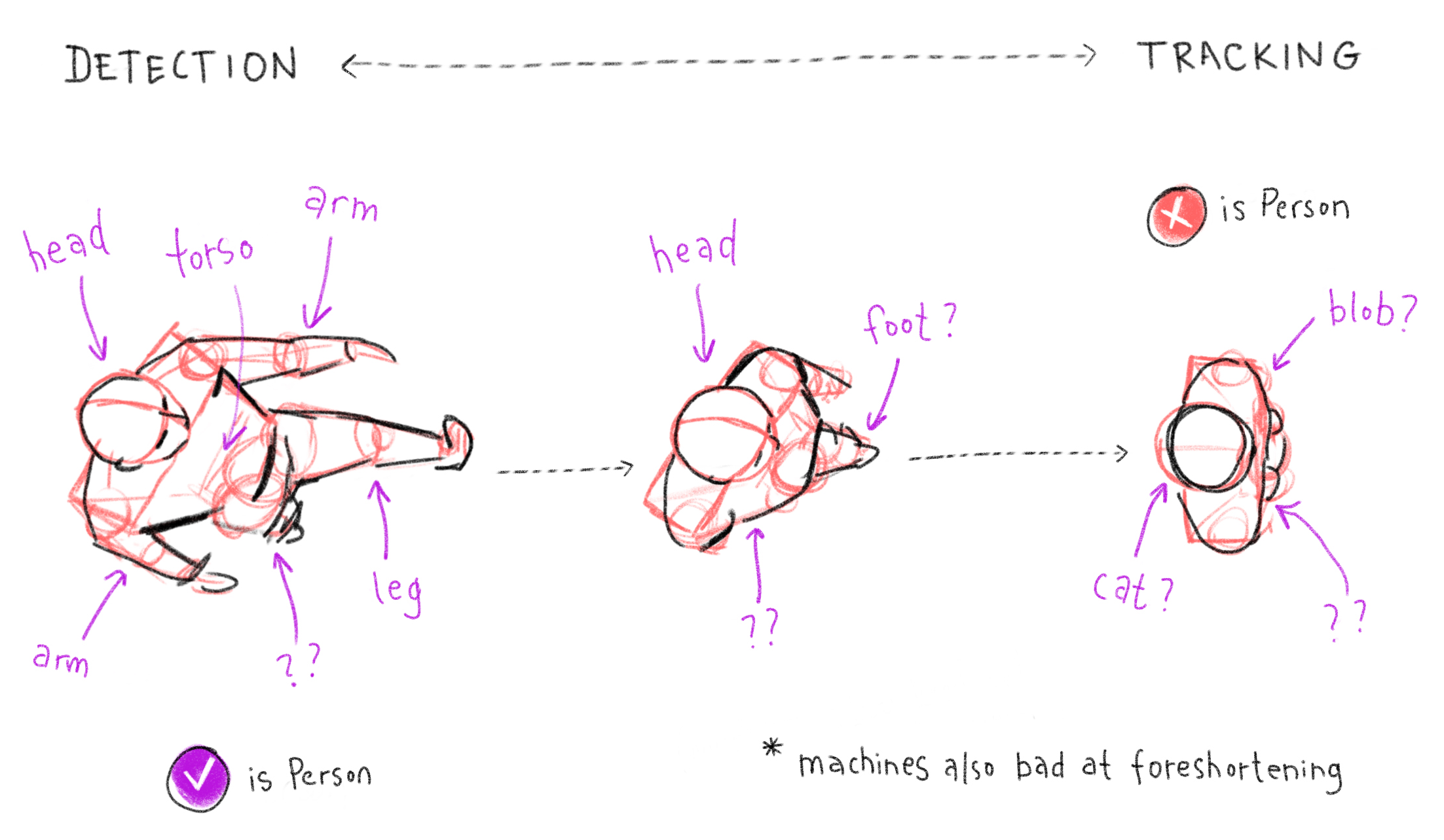
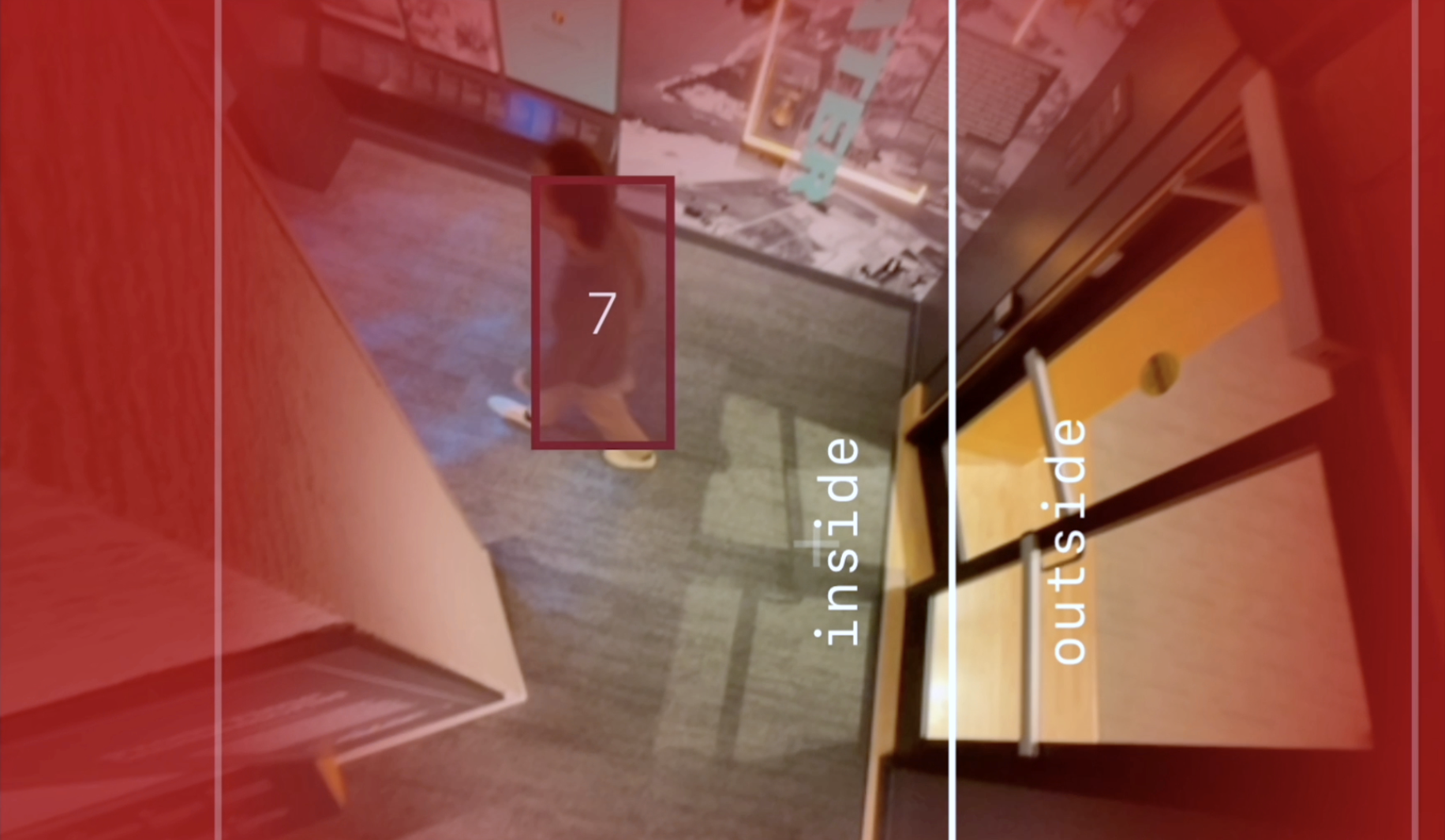
Once bodies are detected in a frame, the app assigns them a random ID and stores their last known position in UV space. Our intended implementation expects the iPhone to be installed out of reach to avoid tampering. The least invasive location for this is above a door, positioning the camera at an overhead angle looking down at the floor. This placement simplifies counting by reducing issues like overlapping bodies. However, it introduces a drawback: the detection model struggles to recognize bodies directly underneath the camera, as the top of a head provides minimal detail for the model to predict.

We figured out that using two models—one for detection and another for tracking—helped address this limitation. VNSequenceRequestHandler excels at interpolating changes to general subjects between frames, so we prioritize it in regions where detection might struggle, such as directly underneath the camera. Conversely, we place higher trust in the detection model at the edges of the frame, where more of a person’s body is likely to be visible due to the camera angle.

Detection Vs Tracking, Cropped

Recognition

There is one final piece of this puzzle to solve: recognition. To be clear, we are not interested in “identifying” individuals. We define “recognition” as the ability to ensure that one person is consistently treated as the same person across consecutive frames. Apple’s detection and tracking APIs are not inherently capable of doing this. In fact, the detection API treats each frame as if it contains entirely new subjects, and while the tracking API maintains a lock on a subject between frames, it cannot guarantee that lock and, in our experience, often drifts. In either case, our implementation requires frequent detection cycles to ensure new people are discovered, which means we need a way to determine who is new and who was already there.

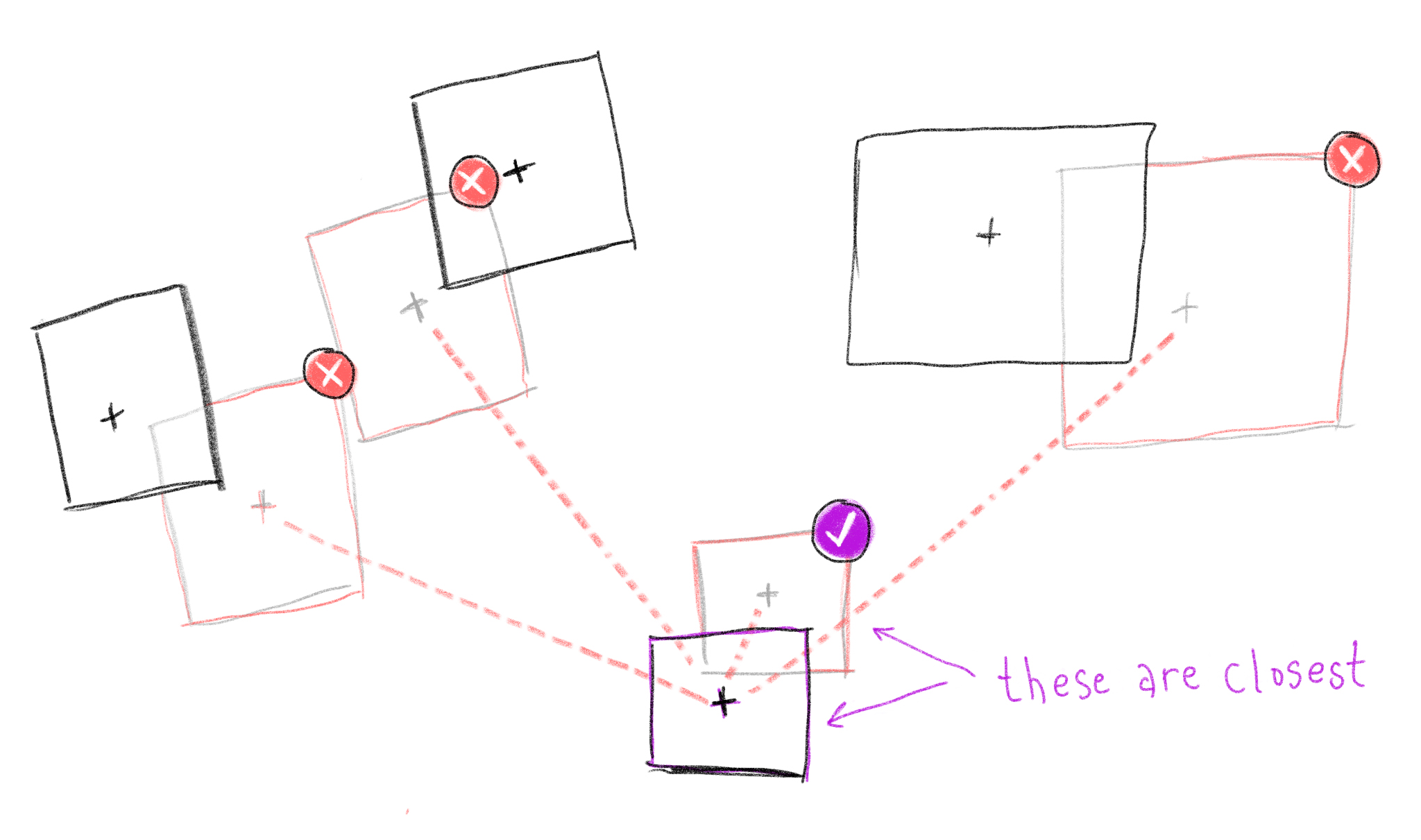
After testing a variety of techniques for this problem, we determined the simplest solution was best. During each detection cycle, we compare the positions of each newly detected subject to previously stored positions. By calculating distances between new and old subjects, we can decide which detections belong to the same subject. To prevent errors such as “jumping” subjects, which can occur during coinciding entrances and exits, we limit movement to a maximum distance for matching. We also configure a threshold for when to stop comparing the position of someone who has likely left the scene. While this technique introduces some subjectivity, it has generally proven effective and performant.

Recognition, Cropped

Analytics

Our final step involves capturing that actual visitor data. Sticky Culture uses a custom Firestore database to collect statistics in all of our interactive experiences. In the past, we used Google Analytics and tried various other vendor-based solutions, but the result always felt mismatched for our needs. Our custom schema is simple and flexible, enabling us to collect exactly the data we need without having to stretch it around irrelevant concepts like campaigns or conversions. Since we are only concerned with determining the number of visitors for a particular exhibit, we simply transmit the time when one of two actions occurred: an entrance or an exit.

Boop on GitHub

Looking Ahead

The prototype for Count Trackula is already in action at the Portland Exhibit at the Oregon Historical Society. This exhibit, featuring a single entry point and three interactive stations, serves as an ideal testing ground. Admittedly, there is room for improvement, but the initial results have still provided us with valuable insight that complements our standard interaction analytics. As Count Trackula continues to evolve, we look forward to sharing our progress and lessons learned.

The Power of Creative Systems

Lessons from Brian Eno and Hella Jongerius

At first glance, Brian Eno and Hella Jongerius may seem worlds apart—one a pioneer of ambient music, the other a visionary in design. Yet, both grapple with a common challenge: how to scale creativity without sacrificing its humanity.

Their solution? Designing systems that foster evolution, surprise, and individuality rather than controlling every detail. This is where their most compelling ideas emerge.

Beyond Imperfection: The Pursuit of Uniqueness

While their work might be described as embracing imperfection, that misses the mark. Eno and Jongerius aren’t focused on flaws; they aim to create things that resist replication, that feel alive. Their true pursuit is uniqueness.

For Eno, this manifests in his generative music, where loops and algorithms produce endlessly varied compositions. The goal isn’t flawlessness, but difference—music that is never the same twice, and therefore constantly renewed.

Jongerius applies this philosophy to physical objects. By keeping the maker’s hand visible in her work, she ensures each piece carries distinct traces of its creation. Her approach isn’t about highlighting imperfections; it’s about pushing back against mass production’s uniformity, making each object singular.

Systems that Foster Variation

Both Eno and Jongerius build systems, but not for predictability or perfection. Their systems are designed to encourage variation and leave space for the unexpected. Eno’s musical algorithms generate constantly evolving soundscapes. Jongerius’s design processes incorporate the unpredictability of human touch into industrial production.

The core insight is that creativity thrives when systems allow for individuality. To create something truly unique, you can’t control every variable—you must create conditions where uniqueness naturally emerges.

Technology as Partner, Not Driver

Though they use technology, Eno and Jongerius don’t see it as a tool for precision or optimization. Instead, it unlocks new possibilities while never dictating the creative process. For Eno, technology introduces randomness and evolution, letting his music shift beyond his control. For Jongerius, machines scale her designs, but she ensures each product retains its unique, handcrafted quality.

Their mastery lies in how they direct these systems. Technology provides structure, but human intention keeps the work dynamic and alive. It’s this balance that ensures their creations remain unpredictable and evolving.

The Process as the Product

For both Eno and Jongerius, the process itself is paramount. Eno’s music is a constantly evolving system, and Jongerius’s design process imbues objects with human touch. Neither views their work as a finished product; they see value in the ongoing evolution.

This challenges the notion that creative work must be “completed.” If the most interesting things happen in the process, why rush to close it off? Perhaps the goal isn’t perfection, but to create something alive—something that continues to evolve.

Is STEAM Enough?

Why We Need to Empower, Equip, and Evolve for the Future

We’ve spent decades expanding what we teach kids. First it was the basics—reading, writing, and arithmetic. Then we added science and technology to the mix. Eventually, the arts got pulled in, and we ended up with STEAM. And STEAM has been good. It’s pushed students to think critically, explore creatively, and work across disciplines.

But here’s the problem: STEAM might not be enough anymore.

Bridging the Gap Between Education and the Future

The world’s changing fast—faster than our education systems can keep up. Artificial intelligence, automation, climate change… it’s a long list. All of this is reshaping industries in ways we can’t predict. So, while STEAM gives students useful tools, it doesn’t quite prepare them for the bigger challenges they’ll face. The future’s not just about knowing how to code or paint or do algebra. It’s about adaptability, emotional intelligence, and the ability to learn quickly—things traditional education doesn’t focus on enough.

Take the Montessori approach, for example. It’s great at promoting independence and self-directed learning. Kids learn how to think on their own. But even Montessori doesn’t fully equip students for the complexity of the future. We need something that bridges that gap.

Sticky Culture’s Perspective

We’re not education experts. We don’t run schools. But at Sticky Culture, we’ve spent years designing experiences that engage people at the intersection of art, science, and technology. We think a lot about how people learn—how they absorb information and how they apply it in creative ways. So, while we aren’t a traditional educational institution, we’ve got some insight into what makes people better at thinking creatively and adapting to change.

That’s where E3—Empower, Equip, Evolve comes in. It’s not about reinventing the wheel, but about building on what’s already out there. STEAM, SEL, Montessori—they’re all valuable. But what we’re proposing is an integrated approach that prepares students not just for the next job, but for a future that’s constantly shifting.

Empower

Objective: Help students build resilience, adaptability, and emotional intelligence so they can handle the unpredictable.

The world doesn’t stay the same, and neither should the way students approach it. Teaching them facts isn’t enough—they need mental tools to navigate uncertainty. This is where emotional intelligence comes in. How do you handle change? How do you bounce back from failure? These aren’t just soft skills—they’re essential survival tools.

  • Resilience and Adaptability: Projects that mirror real-world challenges (think Project-Based Learning, or PBL) can help students learn to pivot when things don’t go as planned.

  • Emotional Intelligence: The future demands empathy. Students who understand themselves and others will be better equipped to collaborate in a global, interconnected world.

  • Critical Thinking and Metacognition: Inquiry-based learning encourages students to think about their thinking. Understanding how they approach problems can help them solve the next set of complex, real-world issues.

Equip

Objective: Give students a broad base of interdisciplinary knowledge and the skills to adapt it quickly.

The future will be full of surprises. Students need more than subject-specific expertise—they need the ability to connect dots across different fields. This means breaking down the silos between subjects and showing students how the world is interconnected.

  • Interdisciplinary Learning: Imagine students working on projects that combine science, technology, history, and art—solving real problems in the way the world actually works.

  • Rapid Learning Abilities: Industries are going to change faster than curriculums can keep up. So, instead of teaching students a set of static facts, teach them how to learn on the fly.

  • Collaboration and Communication: Students must learn to communicate and collaborate effectively with both people and AI systems across disciplines. As AI’s role grows, preparing students for this collaboration is essential.

Evolve

Objective: Adapt the education system itself to stay relevant in a constantly changing world.

The traditional education model doesn’t reflect the complexities of modern life. Categories like “math” or “science” don’t really exist in the real world. Problems don’t come neatly packaged. We need to evolve the system to reflect that.

  • Curriculum Design: Let’s build curricula around real-world themes like climate change or urban planning—topics that require students to draw from multiple disciplines at once.

  • Inquiry-Based Learning and Ethical Reasoning: Today’s challenges, and those of the future, are both ethical and technical. Students need tools to navigate complex academic and moral questions.

  • Fostering Lifelong Learning: In a world that’s constantly evolving, learning can’t stop at graduation. We need to foster curiosity and adaptability to ensure students are ready for what comes next.

A Future-Focused Approach

Let’s be honest: no single framework will solve all the problems facing education today. The future is uncertain, and our systems are slow to change. But if there’s one thing we know, it’s that the faster we adapt, the better off we’ll be.

That’s what E3 is about. It’s not a replacement for what’s out there. It’s a way to bring it all together—resilience, adaptability, emotional intelligence, interdisciplinary learning—and prepare students for a world we can’t predict.

So let’s empower, equip, and evolve—together.

Explore the Deep Dive Audio Overview

Want to dive deeper into the ideas we’ve discussed? Check out the Deep Dive Audio Overview. We generated it using Google NotebookLM, an AI-powered tool that produced a podcast-style discussion based entirely on this article. In just a few minutes, AI turned text into an engaging audio experience. It’s a small example of what’s possible with these technologies—and a reminder of why it’s so important to prepare for the future they’re shaping. We hope this audio piece gives you a richer understanding of the E3 framework and how it can help equip young people for the challenges ahead.

Is STEAM Enough? Deep Dive

Designing a Digital Docent

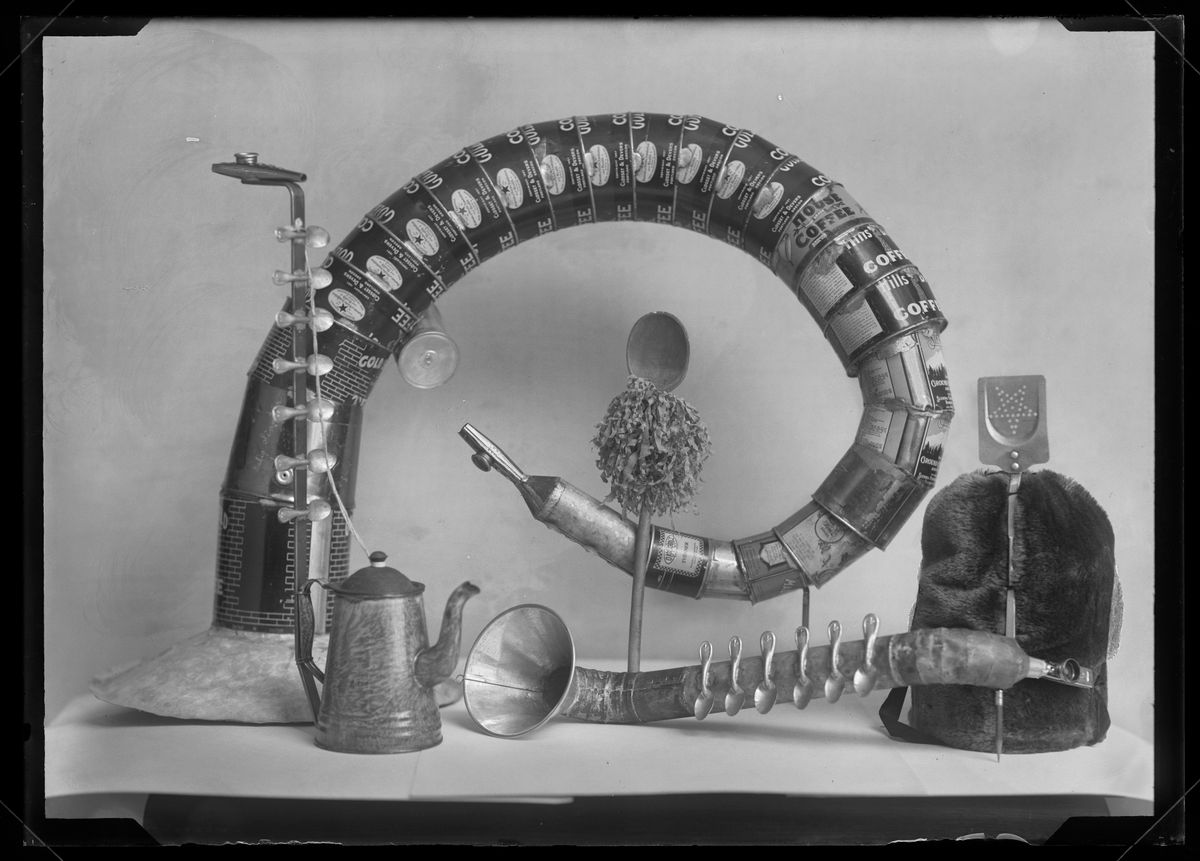
June Drake Photo of Homemade Instruments

Oregon Historical Society Digital Collections, June D. Drake photographs, 1863–2001, Org. Lot 678, Box 26, 059

In today’s digital age, we have unprecedented access to vast collections of historical data and cultural artifacts, yet engaging with them often feels passive and impersonal. Traditionally, museum curators and docents have brought these collections to life—sharing stories, drawing connections, and answering questions with deep, contextual knowledge. However, even the most passionate experts have limited availability and can only cover so much ground. Imagine if you could extend that personalized, knowledgeable guidance beyond such constraints—a guide that is always available and capable of tapping into every piece of information at once.

At Sticky Culture, we’re working to bring the idea of a “digital docent” to life by leveraging AI techniques to interpret vast datasets and transform static content into an engaging exploration. Our key experiment focuses on the June Drake collection at the Oregon Historical Society—a repository of over 2,500 early 20th-century photographs.

As we delved into these images ourselves, we uncovered a wealth of stories: vibrant street parades, candid snapshots of pets, seasonal traditions, and even unexpected oddities that illuminate the full spectrum of early 20th-century life. It’s clear that no single curation could capture the depth and variety of these moments—it’s a collection meant to be explored.

Guiding Exploration

Our goal is for every visitor to discover something personally meaningful within this collection. The digital docent serves as a guide, helping to navigate and connect individual interests to rich historical insights. What follows is a high-level overview of how we approached building the digital docent. There is still much to refine in this prototype and we expect the technology to change rapidly, but we wanted to share some of our initial insights.

Embedded Concepts

The foundation of this project is the meticulously curated metadata provided by the Oregon Historical Society. Their efforts to caption, date, locate, and catalogue each photograph ensure a rich and reliable dataset which provides an essential starting point for meaningful AI-driven exploration. Detailed captions provide essential context by naming individuals, events, and significant details that might otherwise be missed in the photograph.

In order to take advantage of these context clues, we embed the metadata in a vector space using the openai/clip-vit-large-patch14 transformer model. This process places the information into a shared semantic space that captures its underlying meaning and makes it searchable.

When a visitor asks our digital docent a question like “What did town celebrations look like in the 20s?” we embed that question in the same CLIP vector space as the metadata. Our implementation uses FAISS for both indexing and searching. Unlike traditional searches that rely on exact keyword matches, vector embeddings enable the system to compare concepts by calculating their relative distance. For instance, “town” might connect to terms like “village” or “main street,” while “celebration” could link to “parade” or “festival.” Similarly, ”20s” may surface images reflecting the era’s fashion, architecture, or social customs.

This process is inherently subjective, influenced by the quality and training of the model. We sense that CLIP’s training favors a distinct linguistic style that doesn’t perfectly align with the June Drake dataset. Regardless, it’s an incredibly advanced open-source model that provides a solid semantic baseline for us to refine in subsequent steps.

Re-ranking

From the initial visitor question, we narrow a dataset of 2500+ photos down to 100. The initial 100 results should be, in some way, semantically related. Obviously, not all of them will be, but we’ve created a strong starting point. This is where re-ranking with a cross-encoder comes into play. For this task, we are using cross-encoder/ms-marco-MiniLM-L-6-v2.

Unlike the initial CLIP comparison, which focuses on broad semantic similarity, the cross encoder directly compares each query-result pair, scoring them based on deeper contextual relevance. This re-ranking process refines the order of results, ensuring that the most contextually appropriate images are prioritized for our language model, ultimately improving accuracy and coherence in the final narrative.

Generation

The final step brings the digital docent to life. We supply the visitor’s request, the metadata of the top photo result, and detailed instructions to OpenAI’s ChatGPT, specifically gpt-4o-2024-08-06. With explicit prompts guiding its reasoning, the LLM reviews the metadata and generates a short, engaging description of the image as it relates to the visitor’s specific interest. For example, if the visitor says:

“Show me the cutest dogs!”

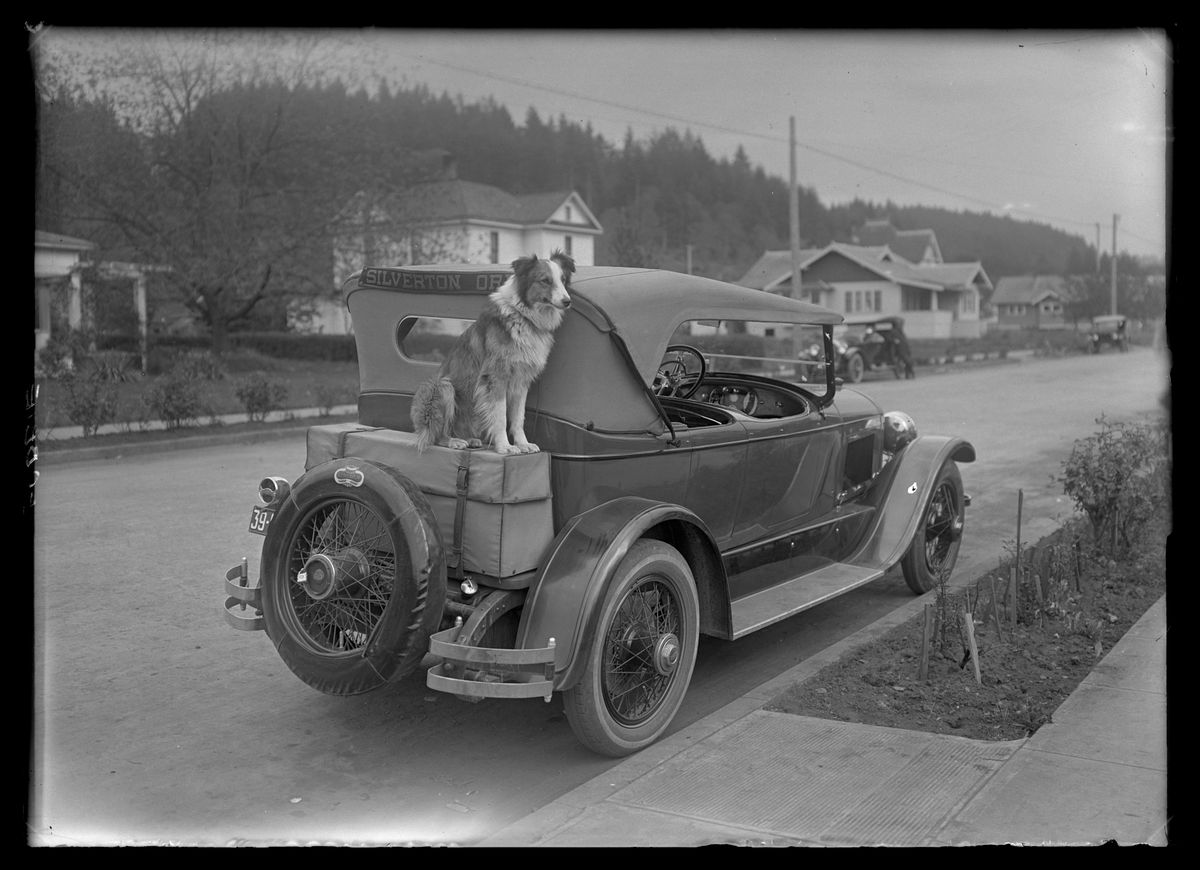
Our search results return the following image, captioned with “An automobile is parked on the side of a street in Silverton, Oregon. A dog sits on the back of the car. The dog is Bobbie the Wonder Dog, a Scotch Collie who achieved nationwide fame when he found his way home to Silverton after being lost in Indiana in 1923.”

June Drake Photo of Bobbi the Wonder Dog

Oregon Historical Society Digital Collections, June D. Drake photographs, 1863–2001, Org. Lot 678, Box 35, 765

But the digital docent presents this image with the following explanation:

“Bobbie the Wonder Dog is your ideal match! This resilient Scotch Collie’s journey from Indiana back home to Silverton after being lost in 1923 charmed the nation, making him an adorable symbol of determination and loyalty.”

Our primary goal for this prototype was to ensure the model strictly adhered to the metadata it received, avoiding any fabrication while effectively connecting it to the visitor’s interest. If a photograph doesn’t fully pertain to a visitor’s request, the assistant aims to provide an informed rationalization rather than invent details.

Discovery

To further guide a visitor’s journey, we are experimenting with a feature that provides content hints in the form of suggested questions for the digital docent. If a visitor is unsure what to explore next, these prompts serve as entry points to related content.

Under the hood, these hints are generated during the re-ranking phase. When we refine our search results, we sample two additional images with increasing distance from the top-ranked result. The metadata from these images is then sent to the LLM, which reverse-engineers potential visitor queries instead of generating direct answers. This approach accomplishes two things: it encourages exploration by presenting topics related to the visitor’s initial interest, and it guarantees that the suggested questions will always have an answer, ensuring a seamless and engaging experience.

A Dynamic Response

Each of these steps plays a crucial role in transforming a static collection into a dynamic, interactive experience. By designing a system that balances precision with storytelling, we enable a more intuitive way to explore historical records—one that feels more like a conversation with an expert than a simple database search. But this project is just the beginning. The methods we’re developing have broader applications, offering a blueprint for how AI can be used to enhance the discovery of and engagement with cultural archives.
Why Your Digital Garden Needs Regular TLC

We like to think of interactive artworks as living, breathing entities—more like the plants in a garden than the static installations in a gallery. These digital creations need regular care to keep them vibrant and thriving. If you’re an owner or curator of these kinds of works, your role isn’t just about putting them on display. It’s about tending to them, nurturing them, and ensuring they continue to grow and engage over time.

Think of Your Artworks as Living Organisms

Interactive artworks aren’t set-it-and-forget-it pieces. They’re dynamic, evolving with each person who interacts with them. It’s kind of like planting a vine: you might set it up on a trellis, but as it grows, it’ll need guidance, pruning, and maybe a bit of support to keep it healthy and flourishing. Without regular attention, even the most beautiful digital artwork can start to wilt—metaphorically speaking, of course.

This living nature of interactive artworks connects deeply to the broader landscape of media ecology, where each piece functions within a larger ecosystem of technology, culture, and user interaction. Just as a gardener must understand the soil, climate, and seasons, so too must a curator or owner grasp the technological infrastructure and cultural context that support these works. Rapid advancements in software and hardware mean that what works today may not work tomorrow, necessitating an ongoing commitment to adaptation and care.

Stewards of a Landscape

In this digital garden, you’re more than just a caretaker; you’re the steward of an evolving ecosystem. Your role isn’t to impose strict order but to create conditions where creativity can flourish. This means being vigilant, ready to prune back elements that have outgrown their purpose, and being prepared to nurture new growth when the unexpected inevitably happens.

But stewardship goes beyond maintenance. It’s about vision—understanding that the garden is never finished, that your digital creations are not products to be shelved but processes that continue to develop. This requires a commitment not just of resources, but of time, attention, and a willingness to embrace change.

Consider, for example, the way interactive installations in public spaces must be designed not just for immediate impact but for long-term sustainability. An installation at a busy urban intersection might need regular updates to remain relevant, much like a public park requires ongoing landscaping. As the steward, your task is to anticipate these needs, ensuring the work remains engaging for future audiences while also managing the technical and logistical challenges that come with maintaining a digital environment.

Expect the Unexpected

Here’s the thing about gardens—whether digital or physical—they have a way of surprising you. Sometimes, the most interesting developments come from the least expected places. A small tweak here, a happy accident there, and suddenly, your artwork is doing something you never planned for. These are the moments that make all the hard work worth it. But it’s also where your role as a caretaker comes into play. You’ve got to be ready to roll with the punches, adapt, and sometimes, let the artwork take you somewhere new.

Interactive artworks often behave unpredictably, much like an overgrown garden bed that suddenly bursts into bloom in an unexpected way. These surprises aren’t just quirks; they’re integral to the nature of digital art, where user interactions, dynamic feedback and cultural shifts can all contribute to the evolution of the work. Embracing these moments not only enhances the vitality of the artwork but also deepens its connection with audiences.

Building a Legacy, One Pixel at a Time

At Sticky Culture, we believe in creating spaces where digital art can grow and evolve—just like a well-tended garden. But it’s not just about the here and now. The decisions you make today will shape how these artworks are experienced in the future. So as you tend to your digital garden, remember: you’re not just maintaining a space, you’re building a legacy. One that will continue to inspire and engage, long after the initial seed has been planted.

Building this legacy requires a keen awareness of the historical context of interactive and new media art. Digital gardens are not a new concept but part of a broader tradition of viewing media as ecosystems that require cultivation. By understanding this lineage and considering how your garden fits within it, you can create a space that not only thrives today but resonates with future generations of curators, artists, and audiences.

Ready to start cultivating your own digital garden? Let’s get our hands dirty—metaphorically, of course.

Meet Lotion: Your Notion Buddy

Hey there, we’d like to share Lotion, a little gem we whipped up to help untangle the sometimes messy business of shuffling data between Notion and… well, everywhere else we need it. Lotion is a nifty JavaScript-based CLI tool that effortlessly scoops up data from a Notion database, tidies it up, and readies it for deployment.

Why We Created Lotion

We’re pretty big fans of Notion around here; it’s ideal for team collaboration, serving as the central hub for gathering, organizing, and refining content for almost every interactive we develop. From trivia games and maps to timelines and our ‘Birding By Ear’ experience, Notion is a collaborative space where the whole team can pitch in, provide feedback, and make content adjustments. This setup ensures we’re no longer juggling multiple versions of documents—Notion is our definitive source of truth. However, exporting this content into usable formats wasn’t as streamlined as it could have been. That’s where Lotion steps in. It simplifies the transition from Notion to deployment, making the export process easier and significantly reducing the chance of mistakes.

What Lotion Actually Does

Data Transformation: Lotion fetches data from Notion and transforms it into the exact shape our applications need.

Filtering and Validation: It makes sure the data is clean and dressed up, ready for showtime, based on some smart rules we set.

Local Storage: Lotion neatly packs up our spruced-up data into JavaScript objects (.js), type-defined files (.ts), or structured JSON files (.json), making everything play nice together. It can even handle downloading and organizing files from Notion’s File & Media columns.

Reproducible Configuration: All the settings live in a simple config file that you can pop into version control without a second thought.

Over the past year, Lotion has saved us countless hours of grunt work, freeing us up to focus on the fun, creative stuff instead of drowning in data drudgery.

Lotion is still a work-in-progress, but it’s sturdy enough that we’re confident it’ll be a game-changer for you too.

Check it out on GitHub and let us know what you think!

Bringing Horsfall’s Birds to Life with Sound

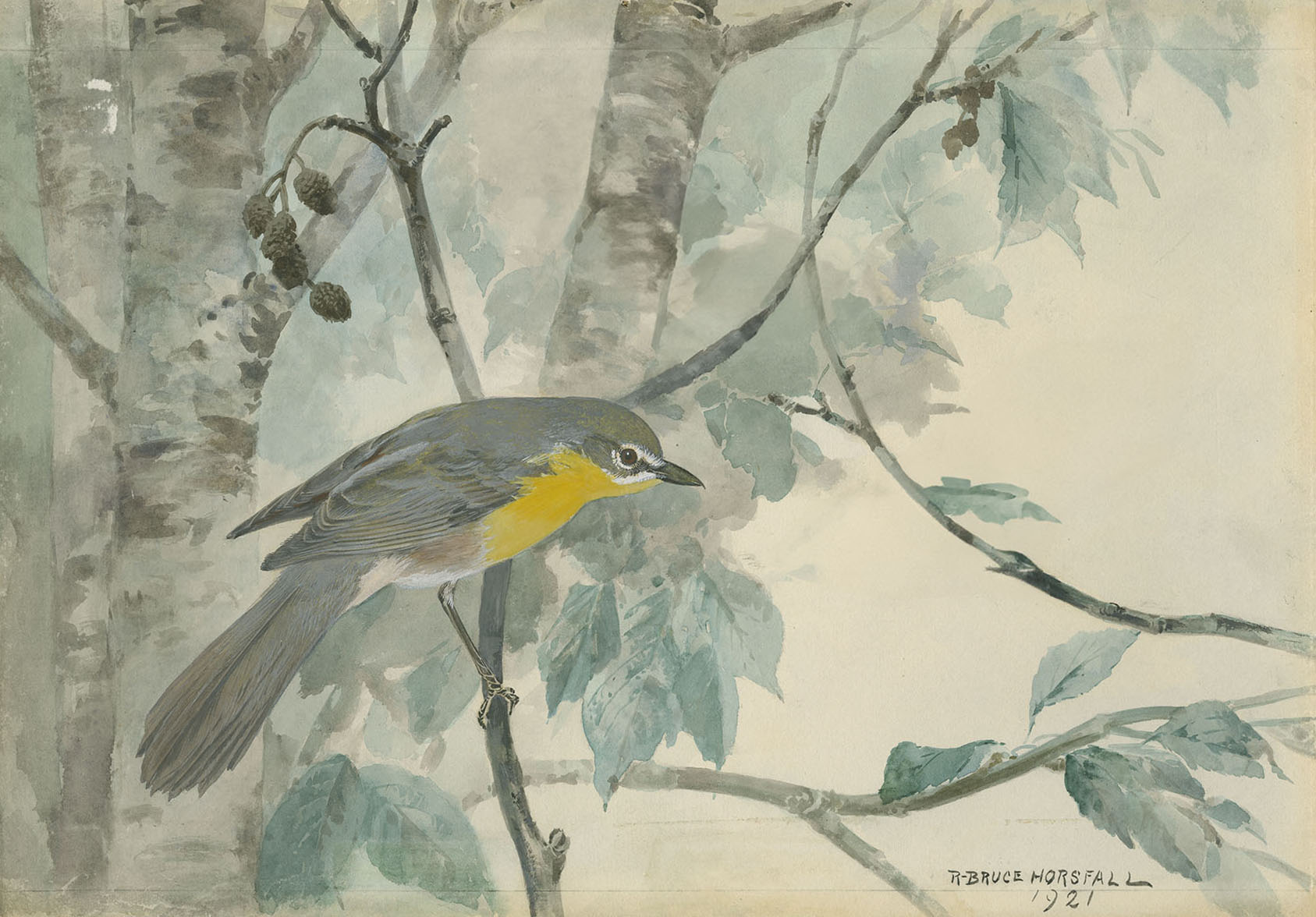
Yellow Breasted Long Tailed Chat

As the “Birds of the Pacific Coast: The Illustrations of R. Bruce Horsfall” exhibit at the Oregon Historical Society comes to a close, we at Sticky Culture are excited to share the impact of our interactive experience. Running from September 22, 2023, to May 19, 2024, the exhibit featured fifty-five watercolors commissioned for a 1923 field guide.

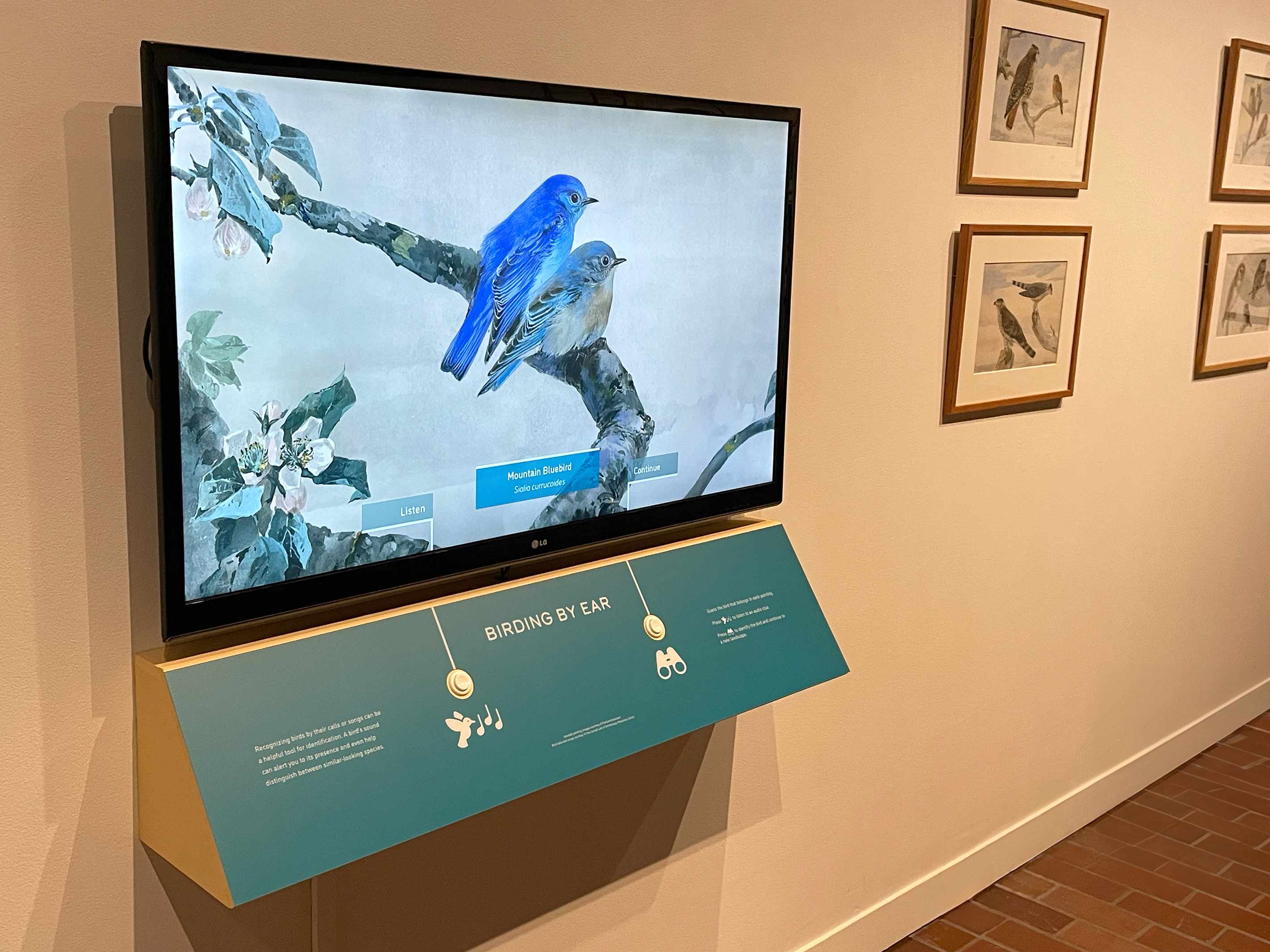
Our contribution introduced bird sounds into the otherwise quiet space, enriching the visitor experience. Participants engaged with digital versions of select paintings, listened to bird calls, and attempted to identify the bird before it was revealed in the artwork. This approach not only enhanced the educational aspect but also added an element of delight and challenge for birders and art enthusiasts alike.

Despite a very limited budget, we creatively overcame financial constraints. We utilized a large passive display with two arcade buttons located in a reader rail below the display, connected to a microcontroller and a Mac mini. One button played the bird sound, sourced from the Cornell Lab Macaulay Library, while the other revealed the bird and advanced to the next scene. Additionally, we used new AI tools to seamlessly remove birds from the paintings, displaying these edited images when the bird sound played. Visitors could then choose to reveal the bird and its name.

For project management, we used Notion to collaborate with OHS and organize the images, sounds, and copy. This streamlined our workflow and ensured a smooth integration of interactive elements.

Birding by Ear

The interactive elements drew significant interest and participation:

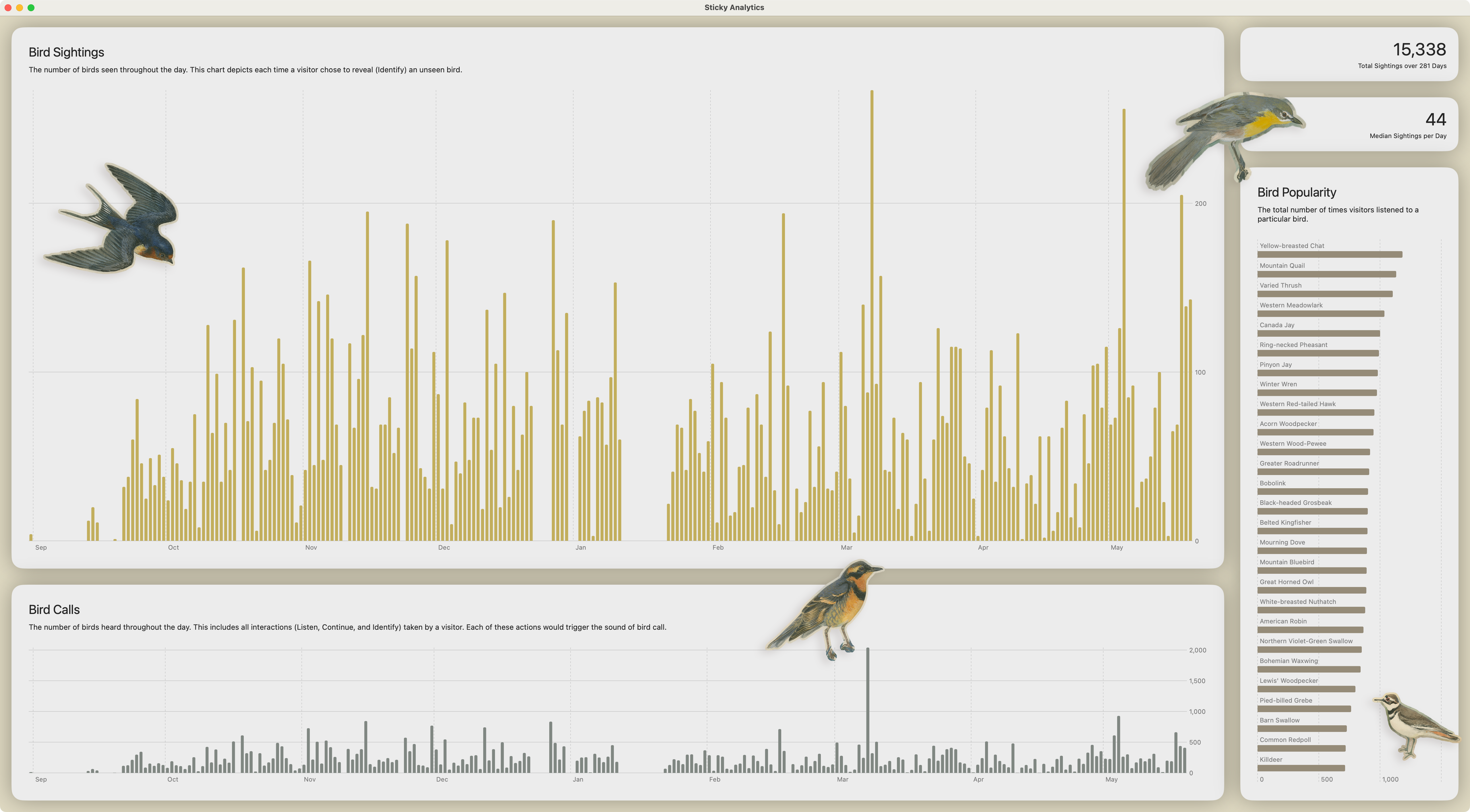
  • Total Birds Spotted: 15,338 (over 281 days)

  • Birds Spotted Per Day: 44 (median)

These metrics highlight the engagement and interest generated by the interactive, deepening visitors’ appreciation and understanding of Horsfall’s work.

We’re grateful to the Oregon Historical Society for the opportunity to contribute to this enriching exhibit. We look forward to many more collaborative projects that bring art and education to life.

You’ll notice in the chart that Friday, March 8th was a particularly noisy day. On that day, a group of 80+ elementary students took a field trip to the museum. The students’ favorite bird call came from the Varied Thrush, as pictured nearby.

Introducing Sticky Culture

Welcome to Sticky Culture, where we are embarking on an extraordinary journey of creativity, learning, and community engagement.

As we look to the future, our excitement is palpable. We are set to explore new technologies, promising a diverse array of interactive public installations and enriching museum exhibits that are not only visually stunning but also intellectually stimulating and emotionally engaging.

Sticky Culture is more than just an organization. We’re a movement dedicated to enriching lives and communities through the power of interactive storytelling.

We invite you to be part of this thrilling journey. Join us in creating experiences that resonate with and inspire communities of all kinds.

Let’s build a world that’s more engaged, educated, and connected, one story at a time.