Skyline Trail
A Century of Change
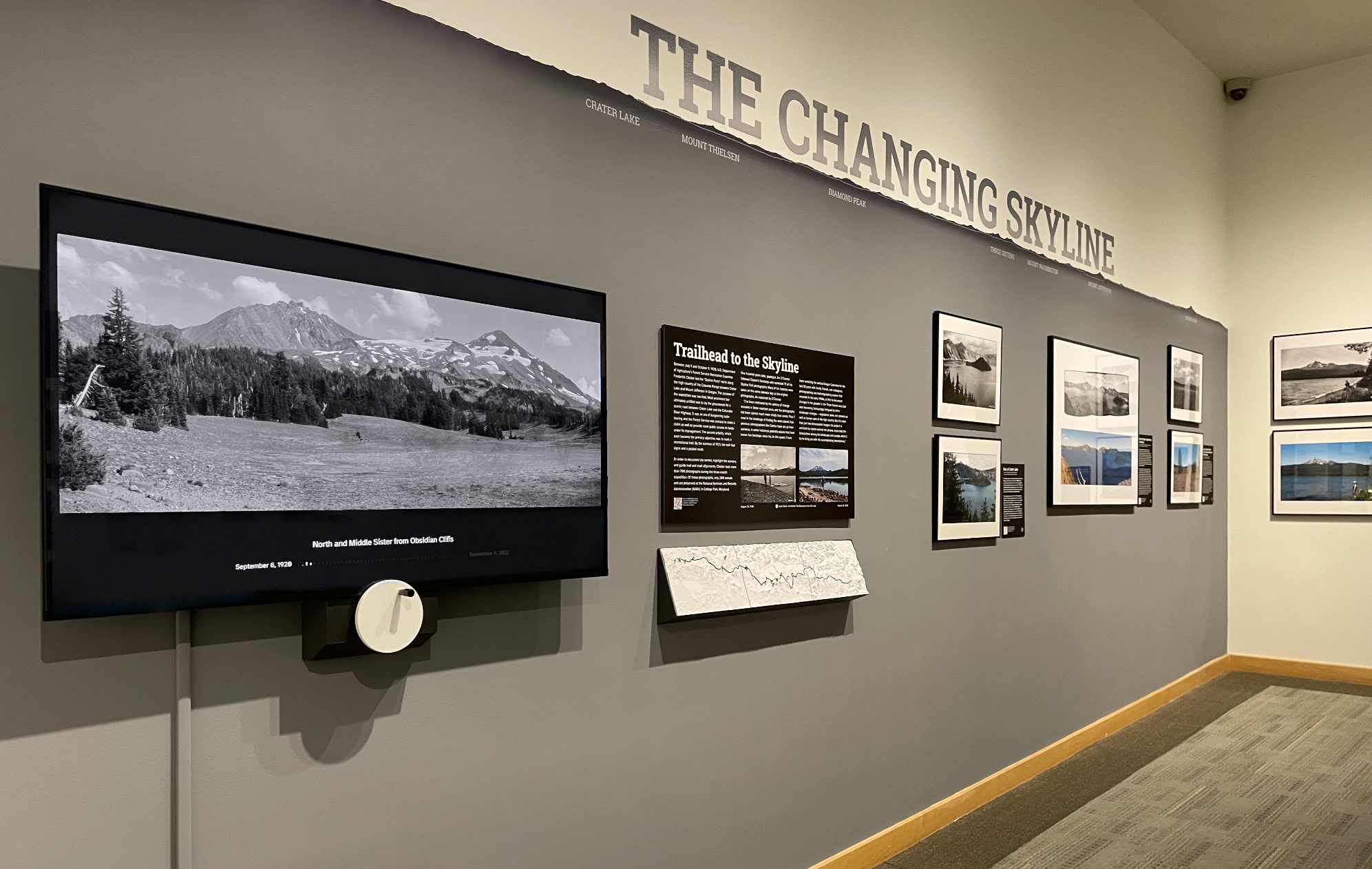
Sticky Culture collaborated with the Oregon Historical Society to bring The Changing Skyline exhibit to life, transforming a narrow gallery into an immersive exploration of Oregon’s historic Skyline Trail. The exhibit tells the story of Frederick Cleator’s 1920 expedition to chart a recreational trail through the Cascade Range, capturing a pivotal moment in public land access. It also explores how the landscapes Cleator documented have transformed over the past century, as geologist Jim O’Connor retraced his steps in 2020 to recreate the original photographs.
Our Approach
Accessibility was at the heart of our design. To ensure clarity for visitors with visual impairments, the exhibit’s body copy features Atkinson Hyperlegible font, developed by the Braille Institute. By combining graphic design, tactile elements, and interactive features, we aimed to capture the experience of traversing the Skyline Trail—offering visitors diverse, meaningful ways to connect with the exhibit’s themes.
Key Features
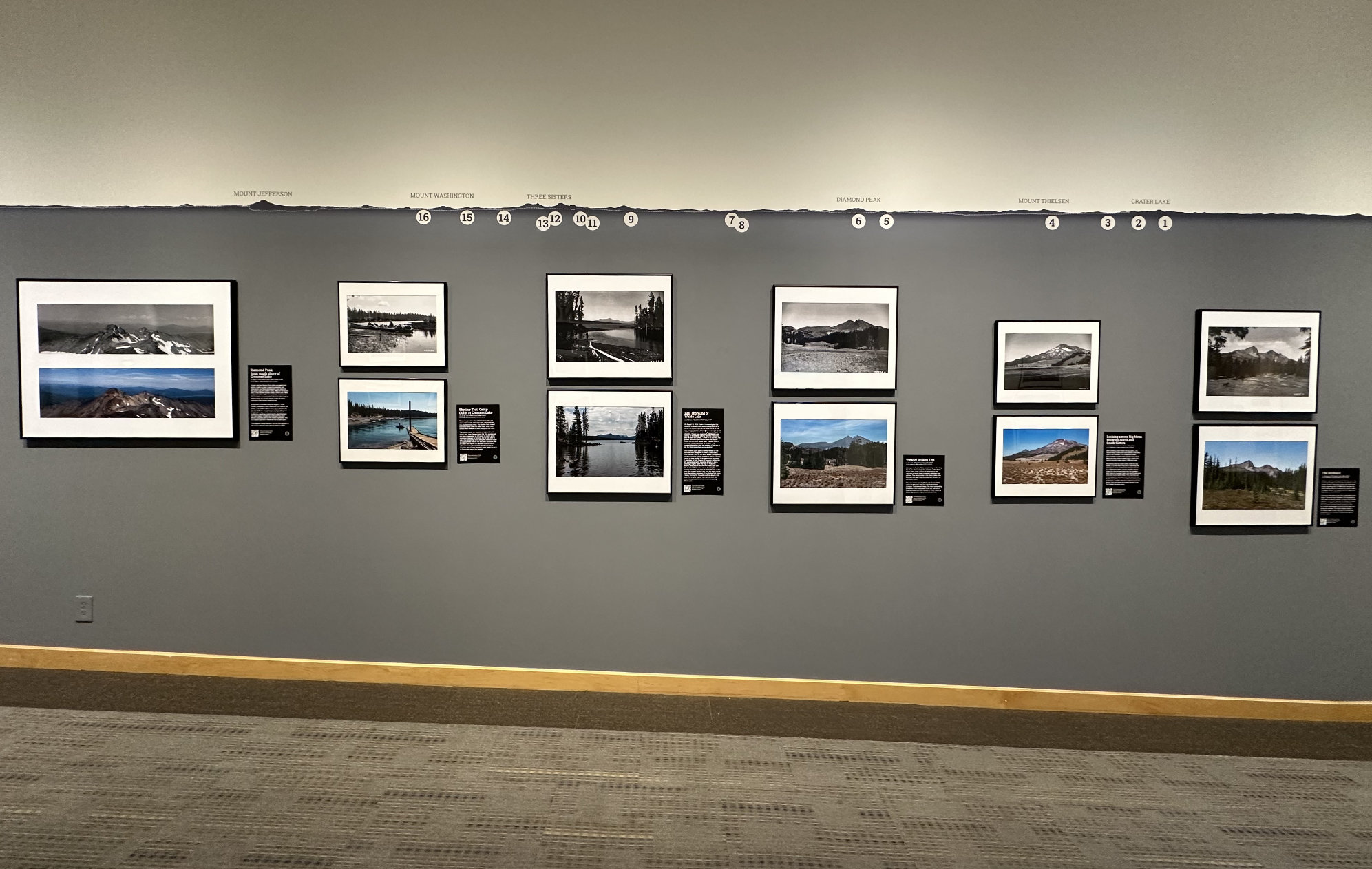
Cascade Silhouette: Above the paired photographs, a large graphic silhouette of the Oregon Cascades spans the exhibit space, mapping the trail from Crater Lake to Mount Jefferson. Numbers on the silhouette correspond to interpretive labels beside the photos, orienting visitors to the trail’s geography.
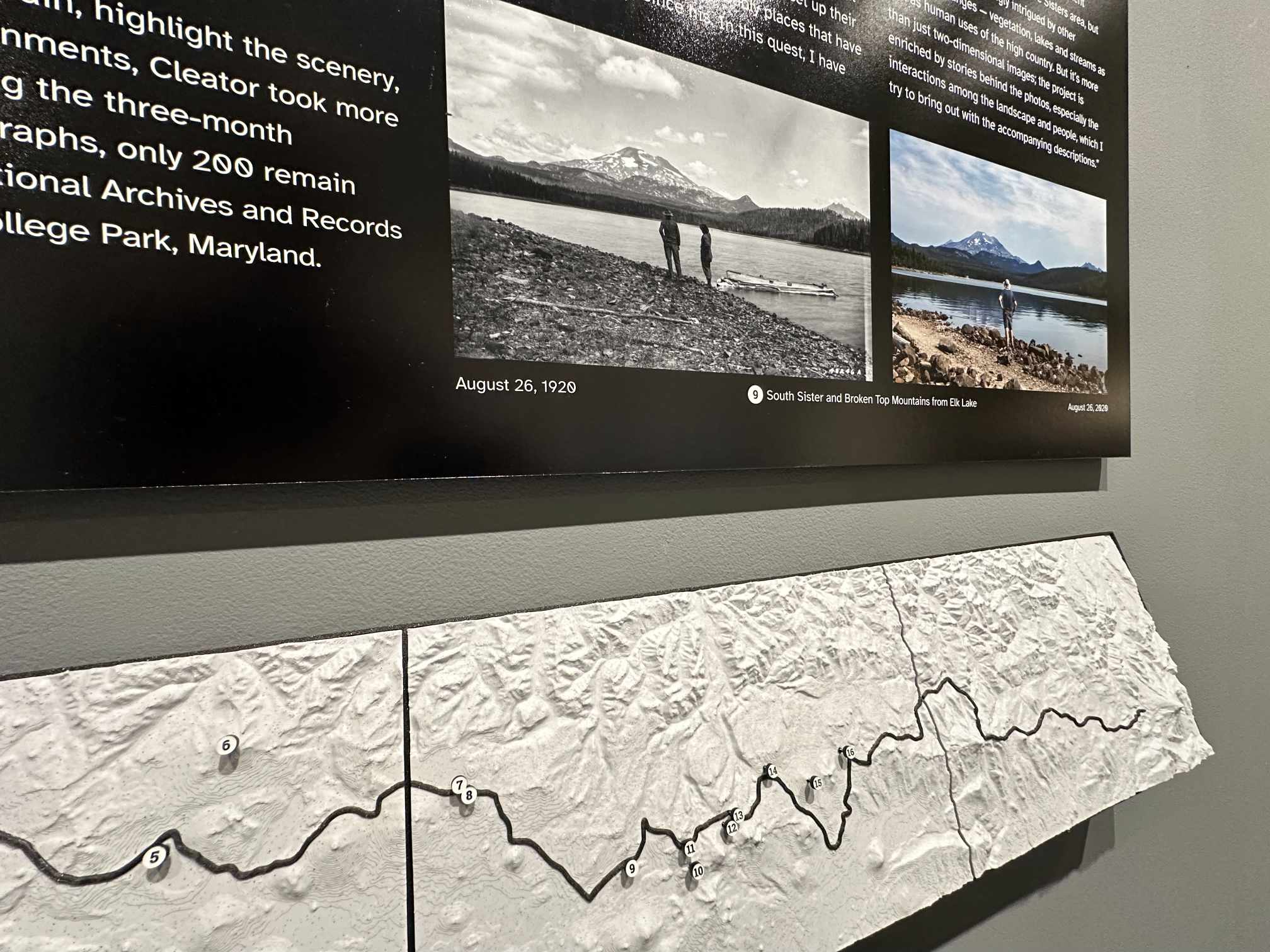
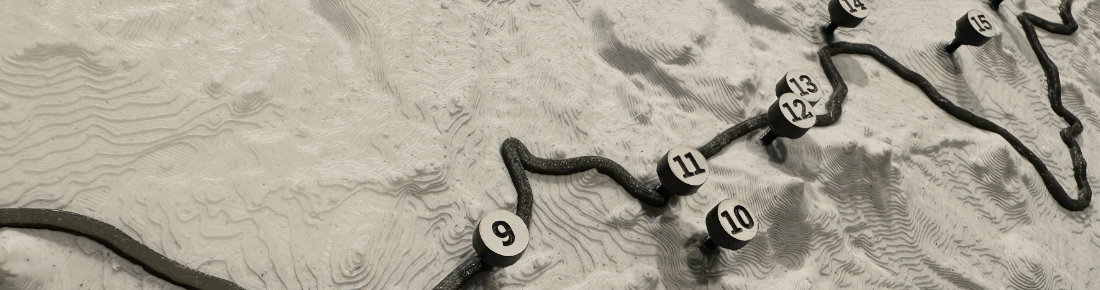
Tactile Topographic Map: A custom-designed topographic map provides a top-down and tactile view of the Skyline Trail, complete with numbered markers for photo locations. Visitors can trace the terrain with their hands, gaining a physical sense of the peaks and valleys Cleator and his team traversed.
“Turning Points” Interactive: A hands-on interactive invites visitors to turn a crank to crossfade between 1920 and 2020 photos, revealing changes in glacier melt, forest growth, and landscape use over a century. The simple yet novel mechanism highlights the impact of time and provides a uniquely engaging way to explore the story behind the images.
Impact
The Changing Skyline exhibit offers a layered, multisensory experience that blends historical documentation with modern storytelling. The juxtaposition of archival and contemporary photography invites visitors to reflect on the interconnectedness of people and landscapes over time. The tactile and interactive elements—particularly the Turning Points crank—create moments of discovery and connection that make this small exhibit memorable and meaningful.